Eid Al-Adha Holiday in Saudi Arabia: Employee Rights, Paid Leave, Overtime Pay, and Rules for Domestic Workers (2026 Guide)
Learn about Eid Al-Adha Holiday in Saudi Arabia, including employee rights, paid leave, overtime pay, Article 112, and what domestic workers should know. Updated 2026 guide for OFWs.
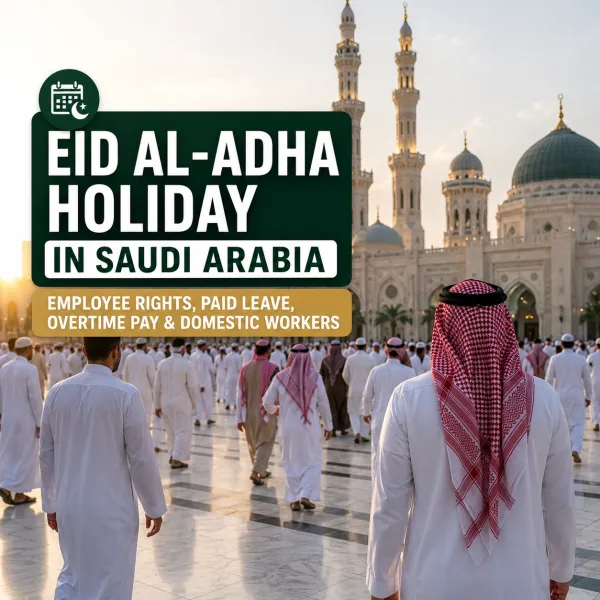
Eid Al-Adha Holiday in Saudi Arabia
Kabayan, kung nagtatrabaho ka sa Saudi Arabia, mahalagang malaman ang iyong mga karapatan tuwing Eid Al-Adha holiday.
Eid Al-Adha is one of the most important Islamic holidays in Saudi Arabia and is recognized as an official holiday under Saudi labor regulations. During this period, many employees have questions about paid holidays, overtime pay, annual leave overlap, and whether the same rules apply to domestic workers.
This guide explains the current rules in a factual and neutral manner based on Saudi labor regulations and official guidance available as of 2026.
What Is Eid Al-Adha in Saudi Arabia?
Eid Al-Adha, also known as the "Festival of Sacrifice," is one of the two major Islamic holidays celebrated worldwide.
In Saudi Arabia, Eid Al-Adha is observed during the Hajj season and is recognized as an official holiday for many workers in both the public and private sectors.
The holiday generally begins with Arafat Day and continues for several days thereafter.
For official announcements and labor updates, employees should refer to the Saudi Ministry of Human Resources and Social Development (MHRSD):
https://www.hrsd.gov.sa
Saudi Labor Law and Eid Holidays
Article 112 of the Saudi Labor Law
One of the most important legal provisions regarding official holidays is Article 112 of the Saudi Labor Law.
Article 112 provides employees with the right to paid leave for official holidays and occasions specified by applicable regulations.
The detailed implementation of Eid holiday periods is generally provided through MHRSD announcements and executive regulations.
This means that eligible employees covered by the Saudi Labor Law are entitled to official holiday leave during Eid Al-Adha.
How Many Days Is the Eid Al-Adha Holiday?
Private Sector Employees
According to official MHRSD guidance, private-sector employees are generally granted:
- Four days of paid Eid Al-Adha holiday
- Starting from Arafat Day
- Subject to official announcements and applicable regulations
Employers and employees should always verify the current year's holiday schedule through official sources.
Is Eid Al-Adha Leave Paid?
Yes, Eligible Employees Receive Paid Leave
For employees covered by the Saudi Labor Law, Eid Al-Adha leave is generally considered a paid holiday.
This means eligible workers continue receiving their wages during the holiday period without deduction because of the official holiday.
The purpose of official holiday leave is to allow employees to observe religious and family commitments while maintaining wage protection.
What Happens If You Work During Eid?
Overtime Rules Under Article 107
Some businesses and industries continue operating during Eid Al-Adha.
Examples include:
- Healthcare facilities
- Security services
- Hospitality businesses
- Transportation services
- Certain industrial operations
When employees are required to work during official holidays, Article 107 of the Saudi Labor Law becomes relevant.
Article 107 addresses overtime compensation and additional pay requirements.
Employees who work during official holidays may be entitled to compensation according to the applicable labor regulations and company policies.
Workers should review their employment contracts and consult HR departments for specific arrangements.
What If Eid Falls During Annual Leave?
Annual Leave and Eid Holidays
Many employees schedule annual leave around Eid Al-Adha.
A common question is whether Eid holidays are deducted from annual leave balances.
Saudi regulations contain provisions addressing overlaps between:
- Annual leave
- Official holidays
- Weekly rest days
- Sick leave
The exact treatment may depend on the circumstances and applicable regulations.
Employees who are uncertain about their leave calculations should seek clarification from their HR department and review official MHRSD guidance.
Watch Full Video on Youtube:
[
)
What If Eid Falls on a Weekly Rest Day?
Weekly Rest Day Overlap
Another common concern involves weekly rest days.
Saudi executive regulations contain provisions governing situations where official holidays overlap with weekly rest days.
Depending on the circumstances, compensation or adjustments may apply according to the applicable regulations.
Because implementation can vary based on specific situations, workers should confirm details through official labor resources.
Are Domestic Workers Covered by the Same Eid Holiday Rules?
Understanding the Difference Between Qiwa and Musaned
One of the most frequently asked questions among OFWs is whether domestic workers receive the same Eid holiday benefits as private-sector employees.
It is important to understand the distinction between:
Qiwa Workers
These include workers employed in the private sector under the Saudi Labor Law.
Examples include:
- Technicians
- Engineers
- Office staff
- Factory workers
- Drivers employed by companies
Musaned Domestic Workers
These include:
- Housemaids
- Family drivers
- Nannies
- Houseboys
- Household cooks
Domestic workers operate under a different regulatory framework than workers covered by the standard Saudi Labor Law.
Do Domestic Workers Automatically Receive Four Days of Eid Holiday?
The Answer Requires Careful Review
Many workers assume that all employees automatically receive the same four-day Eid holiday.
However, domestic workers are governed by regulations that differ from those applicable to private-sector workers.
Current regulations clearly provide domestic workers with rights such as:
- Weekly rest periods
- Salary protection
- Contract protections
- Certain leave entitlements
However, the same four-day Eid holiday provision applicable to private-sector employees is not always explicitly stated in the same manner for domestic workers.
Because employment arrangements may vary, domestic workers should review:
- Their Musaned contract
- Employer agreements
- Official MHRSD guidance
This helps avoid misunderstandings regarding holiday entitlements.
Why OFWs Should Verify Information Carefully
Labor Rules May Depend on Individual Circumstances
Many labor-related questions cannot be answered with a simple yes or no.
Factors that may affect a worker's situation include:
- Contract type
- Employment sector
- Qiwa status
- Musaned status
- Company policies
- Official government regulations
For this reason, workers should avoid relying solely on social media claims and instead verify information through official channels.
Useful Resources for OFWs in Saudi Arabia
To better understand your employment rights, you may also find these resources helpful:
Official Saudi resources:
Frequently Asked Questions
Is Eid Al-Adha leave paid in Saudi Arabia?
For eligible employees covered by the Saudi Labor Law, Eid Al-Adha is generally treated as a paid official holiday.
Can an employer require employees to work during Eid?
Certain industries may require operations during Eid. In such cases, overtime and compensation rules may apply.
Does Article 112 mention official holidays?
Yes. Article 112 provides employees with rights relating to official holidays and occasions specified under applicable regulations.
Do domestic workers automatically receive four days of Eid holiday?
Domestic workers operate under a different regulatory framework. Workers should review their Musaned contract and official guidance to determine applicable rights.
Conclusion
Kabayan, ang pag-alam sa iyong karapatan tuwing Eid Al-Adha ay mahalaga upang maiwasan ang kalituhan tungkol sa holiday pay, overtime, at leave entitlements.
Understanding Article 112, Article 107, official holiday regulations, and the distinction between private-sector and domestic worker rules can help employees make informed decisions. Because labor regulations may change and individual circumstances differ, workers should always verify information through official Saudi government platforms before taking action.
Disclaimer
This article is provided for general informational and educational purposes only and does not constitute legal advice. Labor regulations, executive regulations, and administrative procedures may change over time. Individual circumstances, employment contracts, and sector-specific rules may affect eligibility and entitlements. Always verify information through official Saudi government sources such as Qiwa, MHRSD, Musaned, Absher, or qualified legal professionals before making employment-related decisions.