Run Away and Go Directly to the Embassy in Saudi Arabia: Process, Risks, and What OFWs Should Know (2026 Guide)
Learn the process, possible risks, and important information for OFWs in Saudi Arabia who plan to go directly to the embassy after leaving their employer. Informative 2026 guide for Filipino workers.
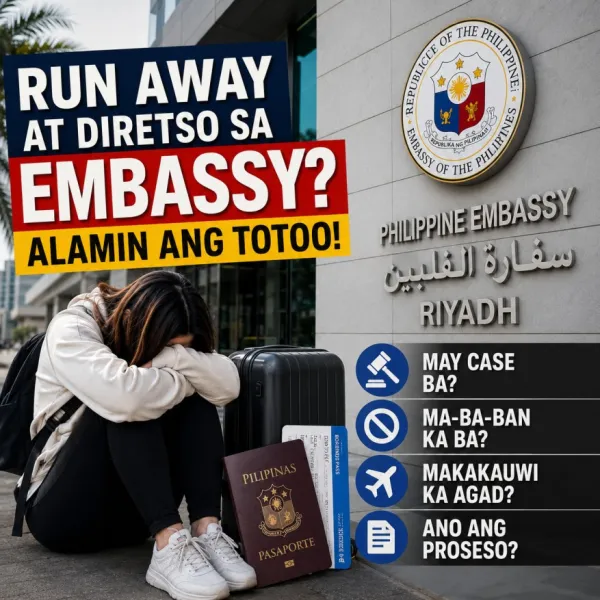
Run away in Saudi Arabia
Kabayan, maraming OFW sa Saudi ang umaabot sa punto na gusto na lang umuwi dahil sa stress, delayed salary, workplace conflict, o personal problems.
Many OFWs in Saudi Arabia search online about:
- runaway sa Saudi embassy
- pwede bang dumiretso sa embassy
- may ban ba kapag runaway
- makakauwi ba agad
- ano ang proseso sa embassy
Before making any decision, it is important to understand the legal process, possible risks, and available options under Saudi regulations.
This guide aims to provide factual, neutral, and informational awareness for OFWs currently working in Saudi Arabia.
What Does “Run Away” Mean in Saudi Arabia?
In Saudi Arabia, “run away” commonly refers to leaving the employer, workplace, or accommodation without following the official employment or exit procedures.
Depending on the situation, the employer may:
- report the worker as absconding
- file a labor complaint
- stop work permit processing
- coordinate with immigration authorities
Some workers use the term “run away” even if they simply:
- stopped reporting to work
- left the accommodation
- transferred to another location due to conflict or safety concerns
The consequences may vary depending on:
- contract status
- iqama validity
- labor records
- employer action
- immigration status
What Does the Philippine Embassy Do for OFWs?
The Philippine Embassy Riyadh and Philippine Consulate General Jeddah assist distressed OFWs regarding repatriation, documentation, and labor-related concerns.
Initial Assessment Process
When an OFW goes directly to the embassy or consulate, officials usually conduct an assessment regarding the worker’s situation.
They may ask for:
- passport
- iqama
- employment contract
- employer information
- explanation of the problem
- supporting evidence
Useful supporting documents may include:
- screenshots
- salary records
- medical documents
- conversations
- contract copies
Temporary Shelter Assistance
In certain situations, temporary shelter assistance may be provided, especially if:
- the worker has nowhere to stay
- there are safety concerns
- there are abuse allegations
- the worker is stranded
Shelter availability may depend on the embassy’s current capacity and evaluation process.
Coordination With the Employer
The embassy or consulate may coordinate with the employer regarding:
- passport release
- unpaid salary
- exit visa
- airfare or ticket
- settlement concerns
Some cases are resolved quickly, while others may take longer depending on the cooperation of the parties involved.
Can an OFW Go Home Immediately After Going to the Embassy?
Not always.
Many workers assume that going directly to the embassy automatically results in immediate repatriation. However, several procedures may still need to be completed first.
Possible requirements may include:
- immigration clearance
- exit visa processing
- identity verification
- labor dispute review
- employer coordination
The processing time depends on:
- iqama validity
- labor status
- immigration records
- employer action
- embassy procedures
Is There a Possibility of an Absconding or Huroob Case?
Yes, depending on the circumstances and employer action.
An absconding or huroob report may affect:
- legal status
- transfer eligibility
- travel processing
- future work opportunities
However, each case is different.
Some workers:
- settle the issue directly with the employer
- complete formal resignation procedures
- receive embassy assistance
- undergo labor mediation
Others may experience delays if there are unresolved labor or immigration concerns.
For more OFW awareness guides, you may also visit:
Watch Video on Youtube:
[
)
Is Formal Resignation Safer Than Running Away?
In many situations, following proper procedures may help reduce complications.
Possible formal options may include:
- resignation
- contract completion
- transfer request
- final exit processing
- labor complaint filing
The best option depends on:
- your contract
- your Qiwa status
- employer relationship
- legal and immigration status
You may also review official labor information through:
Important Documents an OFW Should Keep
If you are experiencing workplace problems, it may be helpful to secure copies of important documents whenever legally possible.
Examples include:
- passport copy
- iqama copy
- employment contract
- salary records
- medical documents
- screenshots of communication
These documents may help clarify your situation during mediation or assessment.
Common Reasons Why OFWs Consider Leaving Their Employer
Many OFWs experience emotional, financial, or workplace pressure while working abroad.
Common concerns include:
- delayed salary
- contract discrepancy
- excessive workload
- denied vacation
- homesickness
- workplace conflict
- mental stress
- communication problems
However, every case should still be evaluated individually and through official channels whenever possible.
Saudi Labor and Immigration Procedures May Change
Saudi labor and immigration regulations may change over time.
Some employment and immigration procedures are managed through:
- Qiwa
- Jawazat
- Absher
- MHRSD
- employer HR systems
Different rules may also apply to:
- domestic workers
- company workers
- household workers
- skilled employees
Because of this, OFWs should always verify updated procedures through official Saudi government platforms and embassy announcements.
Frequently Asked Questions
Can an OFW go to the embassy without a passport?
In some cases, yes. The embassy may still assess the situation and provide guidance regarding travel documents or coordination procedures.
Does running away automatically result in a ban?
Not all situations are identical. Outcomes may depend on immigration records, labor status, employer actions, and how the case is resolved.
Can an OFW return to Saudi Arabia after going home?
Future eligibility may depend on:
- visa history
- labor records
- immigration status
- Saudi regulations
- employer reports
Can an OFW still receive salary or benefits?
Possible claims may depend on:
- employment contract
- labor dispute outcome
- settlement agreements
- available documentation
You may also explore:
PinoyTalks Community Discussions
Final Thoughts
Kabayan, bago gumawa ng desisyon na mag-run away o dumiretso sa embassy, mahalagang maintindihan muna ang proseso, risks, at possible effects nito sa iyong legal status sa Saudi Arabia.
Every OFW situation is different. Some cases may be resolved through communication, labor mediation, transfer procedures, or formal resignation, while others may require embassy intervention.
The safest approach is to stay informed, secure important documents, and seek guidance from official sources whenever possible.
📌 For more OFW guides, Qiwa topics, and Saudi labor awareness updates, visit:
PinoyTalks.com
📌 Join the community discussion group:
PinoyTalksKSA Facebook Group
Disclaimer
This article is for general informational and educational purposes only. It does not provide legal advice and should not be interpreted as official labor or immigration guidance. Saudi labor regulations, Qiwa procedures, immigration rules, and embassy policies may change over time. Always verify information through official Saudi government platforms such as Qiwa, MHRSD, Jawazat, Absher, and the Philippine Embassy or Consulate.