Learn the 2026 Midday Work Ban in Saudi Arabia, HRSD rules, employer duties, worker safety tips, reporting channels, and OFW guidance.
Midday Work Ban in Saudi Arabia
Introduction
Kabayan, kung nagtatrabaho ka sa labas sa Saudi Arabia, importante mong malaman ang patakaran tungkol sa midday work Ban in Saudi Arabia dahil ito ay direktang may epekto sa kaligtasan, oras ng trabaho, at karapatan ng mga outdoor workers tuwing matinding init.
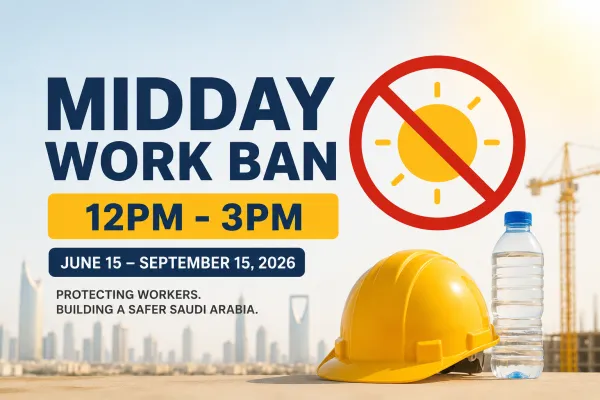
The Ministry of Human Resources and Social Development, in coordination with the National Council for Occupational Safety and Health, announced the implementation of the Midday Work Ban for 2026. The rule applies to all private-sector establishments from Monday, June 15, 2026, until Tuesday, September 15, 2026, from 12:00 p.m. to 3:00 p.m.
This guide explains what the Midday Work Ban means, who is covered, what employers must provide, what workers should do during extreme heat, and how violations may be reported through official HRSD channels.
For related Saudi labor guides, you may also visit PinoyTalks.com and read the guide about Saudi Labor Law Break Time.
What Is the Midday Work Ban in Saudi Arabia?
The Midday Work Ban in Saudi Arabia is a seasonal occupational safety rule that prohibits work under direct sunlight during the hottest hours of the day.
For 2026, HRSD confirmed the following schedule:
- Start date: June 15, 2026
- End date: September 15, 2026
- Banned hours: 12:00 p.m. to 3:00 p.m.
- Coverage: All private-sector establishments
- Main purpose: Protect workers from heat stress, heat exhaustion, and other health risks caused by direct sunlight exposure
The official HRSD announcement can be checked here: HRSD Midday Work Ban 2026 Announcement.
Why the Midday Work Ban Matters
Outdoor work in Saudi Arabia can become dangerous during summer, especially for workers exposed to direct sunlight for long periods. Heat stress can affect the body quickly, especially when a worker is doing heavy physical labor, wearing protective clothing, or working in remote areas such as construction sites, roads, desert areas, industrial yards, or field maintenance locations.
HRSD’s occupational safety guidance explains that direct exposure to sunlight and hot environments can lead to health risks such as heat stress, dehydration, heat cramps, heat rash, heat syncope, and heat stroke.
This is why the midday work Ban in Saudi Arabia is not only a labor rule. It is also a health and safety protection.
Who Is Covered by the Midday Work Ban?
The rule applies to private-sector establishments where workers may be required to work under direct sunlight.
This can include workers in:
- Construction
- Road work
- Maintenance
- Delivery and outdoor logistics
- Cleaning services
- Landscaping
- Industrial yards
- Field operations
- Desert-based work sites
- Other outdoor jobs exposed to direct sunlight
If the work is outdoor and under direct sunlight between 12:00 p.m. and 3:00 p.m., the rule may apply unless the job falls under an official exemption or special operational requirement recognized by the authorities.
Kabayan Question???
"Sir Paano kapag ang work ay sa disyerto?"
What If the Work Is in the Desert?
If the work location is in the desert, the Midday Work Ban may still apply if workers are exposed to direct sunlight during the banned hours.
A desert location does not automatically remove worker protection. In fact, desert work can carry higher heat-related risks because of direct sun exposure, high surface temperatures, limited shade, and distance from medical support.
Workers in desert areas should be extra careful with hydration, shaded rest areas, emergency response plans, and proper supervision.
Employer Responsibilities Under HRSD Recommendations
HRSD urged employers to organize working hours according to the Midday Work Ban and implement preventive measures at workplaces.
Employers are expected to provide:
Drinking Water
Workers should have access to safe drinking water. HRSD’s heat-stress guidance emphasizes the importance of fluids, especially water, for workers exposed to hot places.
Water should be available near the worksite and not only in distant accommodation or office areas.
Suitable Rest Areas
Employers should provide proper rest areas where workers can recover from heat exposure.
These rest areas should be suitable, prepared, and accessible to workers during breaks.
Shaded Areas
For outdoor work, shaded areas are very important. Workers should not be left under direct sunlight without a place to rest away from heat exposure.
Shade can come from temporary shelters, tents, shaded structures, or other safe cooling areas depending on the worksite.
Personal Protective Equipment
HRSD guidance mentions personal protective equipment for workers exposed to hot environments, including items such as head protection.
Employers should ensure that PPE is suitable for the work environment and does not increase heat risk unnecessarily.
Heat-Stress Awareness
Employers should raise worker awareness about heat stress risks and prevention methods.
This includes explaining symptoms such as dizziness, fatigue, excessive sweating, cramps, confusion, or signs of heat exhaustion.
Monitoring Worker Condition
HRSD’s announcement also emphasizes monitoring workers’ physical condition during high-temperature periods.
This is important because some workers may continue working even when they already feel weak, dizzy, dehydrated, or unwell.
Safety Officer and Supervisor Responsibilities
HRSD’s occupational safety guidance also highlights the role of supervisors and safety officers.
They should help ensure that workers understand the risks before starting work, wear proper PPE, and follow site safety procedures.
A responsible supervisor should check work conditions, monitor heat exposure, and make sure the site is ready before field activities begin.
This is especially important for work in high-risk areas such as construction sites, road work zones, outdoor maintenance locations, and desert operations.
Golden Rules for Workers During Hot Weather
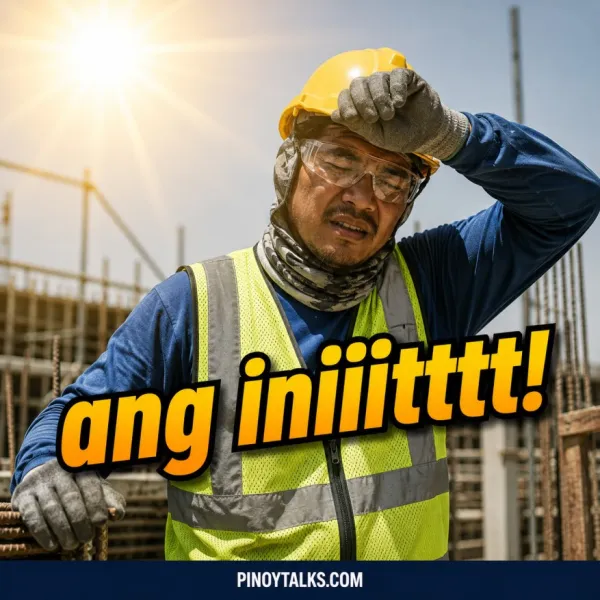
Based on HRSD heat-stress guidance, workers exposed to direct sunlight and hot environments should follow basic safety practices.
Drink Water Frequently
Do not wait until you feel thirsty. Workers exposed to heat should drink water regularly.
Dehydration can happen quickly, especially when working outdoors.
Rest in Shaded Places
Use shaded rest areas during breaks. Avoid staying under direct sunlight during rest periods.
Stop Working If You Feel Dizzy or Weak
If you feel fatigue, dizziness, heavy weakness, or unusual symptoms, stop working immediately and inform nearby workers or your supervisor.
Do not ignore warning signs.
Do Not Work Alone in High Heat
If the task is risky or located in a remote area, workers should not be left alone without monitoring or emergency support.
Wear Suitable Clothing
HRSD guidance recommends light and bright-colored clothing where appropriate. Loose and breathable clothing can help reduce heat buildup, depending on the job and safety requirements.
Can Workers Be Asked to Work During the Banned Hours?
The rule prohibits work under direct sunlight from 12:00 p.m. to 3:00 p.m. during the implementation period.
However, workers should understand the difference between:
- Direct sunlight outdoor work
- Indoor work
- Shaded work
- Emergency or exempted work
- Work that is not exposed to direct sun
If a worker is asked to continue working outdoors under direct sunlight during the banned hours, the worker should document the situation carefully and verify the proper complaint process through official channels.
For broader working-hour guidance, you may read: Saudi Labor Law Break Time.
What Proof Can Help If There Is a Violation?
Workers should avoid making complaints without clear proof. Documentation is important.
Possible evidence may include:
- Date and time of the incident
- Exact work location
- Photo or video showing direct sunlight work during banned hours
- Duty roster or work schedule
- Messages from supervisor or company
- Attendance records
- Names of witnesses, if available
- Notes describing what happened
The evidence should be truthful, clear, and safely collected. Workers should not put themselves at risk just to take photos or videos.
For related documentation habits in labor concerns, you may also read Overtime Pay in Saudi Arabia.
How to Report Midday Work Ban Violations
HRSD stated that violations related to non-compliance with the Midday Work Ban can be reported through:
- HRSD unified contact number: 19911
- HRSD mobile application
Workers should report only real violations with clear and honest evidence.
False or exaggerated complaints can create problems for the worker and may weaken legitimate cases. Always document facts clearly and avoid emotional or incomplete reporting.
Practical Advice for OFWs
Many OFWs are afraid to speak up because they worry about their job, contract, or relationship with the employer. This is understandable. However, safety concerns should be handled properly and professionally.
Before escalating a concern, consider these steps:
- Record the date, time, and location.
- Check if the work was truly under direct sunlight.
- Take evidence only if it is safe.
- Ask your supervisor or safety officer politely about the schedule.
- Keep communication professional.
- Use official HRSD channels if there is a clear violation.
For general Saudi labor and Qiwa concerns, read the Saudi OFW FAQ Guide.
Common Misunderstandings About the Midday Work Ban
“It only applies to construction workers.”
No. The HRSD announcement applies to private-sector establishments. Construction workers are commonly affected, but other outdoor workers may also be covered.
“If the work is in the desert, the rule does not apply.”
Not automatically. If the work is outdoor and under direct sunlight during banned hours, the rule may still apply unless there is an official exemption.
“Workers can report even without proof.”
Workers should avoid reporting without clear evidence. It is better to document the situation carefully and truthfully.
“The ban means no work at all from 12 p.m. to 3 p.m.”
The rule focuses on work under direct sunlight. Indoor work, shaded work, or other work conditions may be treated differently depending on the situation and official rules.
“Only employees can benefit from this rule.”
The purpose of the rule is to protect workers’ health and safety. Employers also benefit because proper compliance can reduce injuries, complaints, downtime, and productivity losses.
FAQ About Midday Work Ban in Saudi Arabia
What is the Midday Work Ban in Saudi Arabia?
It is a seasonal rule that prohibits work under direct sunlight during the hottest hours of the day, from 12:00 p.m. to 3:00 p.m., during the implementation period.
When is the Midday Work Ban active in 2026?
For 2026, HRSD announced that it is active from June 15, 2026, to September 15, 2026.
What time is work banned under direct sunlight?
The banned period is from 12:00 p.m. to 3:00 p.m.
Who announced the rule?
The rule was announced by the Ministry of Human Resources and Social Development in collaboration with the National Council for Occupational Safety and Health.
What should employers provide?
Employers should provide preventive measures such as drinking water, suitable rest areas, shaded areas, personal protective equipment, heat-stress awareness, and worker monitoring.
Can violations be reported?
Yes. HRSD stated that violations may be reported through the unified contact number 19911 or through the HRSD mobile application.
Should workers report without evidence?
No. Workers should report only with clear and truthful evidence.
Does the rule apply to desert work?
It may apply if the work is under direct sunlight during the banned hours, unless the activity falls under an official exemption or special case.
Conclusion
Kabayan, ang midday work Ban in Saudi Arabia ay hindi lang simpleng schedule rule — malaking tulong ito para maprotektahan ang mga manggagawang exposed sa matinding init, lalo na ang mga OFW na nagtatrabaho sa outdoor jobs.
For 2026, HRSD confirmed that the Midday Work Ban runs from June 15 to September 15, from 12:00 p.m. to 3:00 p.m. Employers must organize working hours and apply preventive measures to protect workers from heat-related risks.
Workers should stay informed, drink water regularly, rest in shaded areas, report symptoms early, and document any possible violation carefully. If there is a clear violation, workers may report it through HRSD’s official channels.
For more Saudi OFW guides, labor law explainers, and practical updates, visit PinoyTalks.com.
Official Sources
Disclaimer
This article is for informational and educational purposes only and does not constitute legal advice. Saudi labor rules, HRSD procedures, and occupational safety requirements may change. Always verify the latest information directly through official Saudi government platforms such as HRSD, Qiwa, and other authorized channels.